In today’s competitive apparel industry, global brands need more than just a manufacturing vendor. They need a reliable production partner capable of maintaining quality, meeting delivery timelines, handling changing order volumes, and responding quickly to new design requirements.
Urbasy Apparels Pvt. Ltd. is building its manufacturing operations around these exact needs. Established in 2017 and headquartered in Tiruppur, India, the company specializes in knitted apparel production and offers integrated support from fabric handling to finished garment delivery.
With modern infrastructure, organized production systems, skilled teams, and a strong focus on quality control, Urbasy is steadily strengthening its position as a dependable partner for international fashion and apparel brands.
A Modern Manufacturing Facility
Urbasy Apparels operates from a modern 44,000 sq. ft. facility spread across three independent buildings.
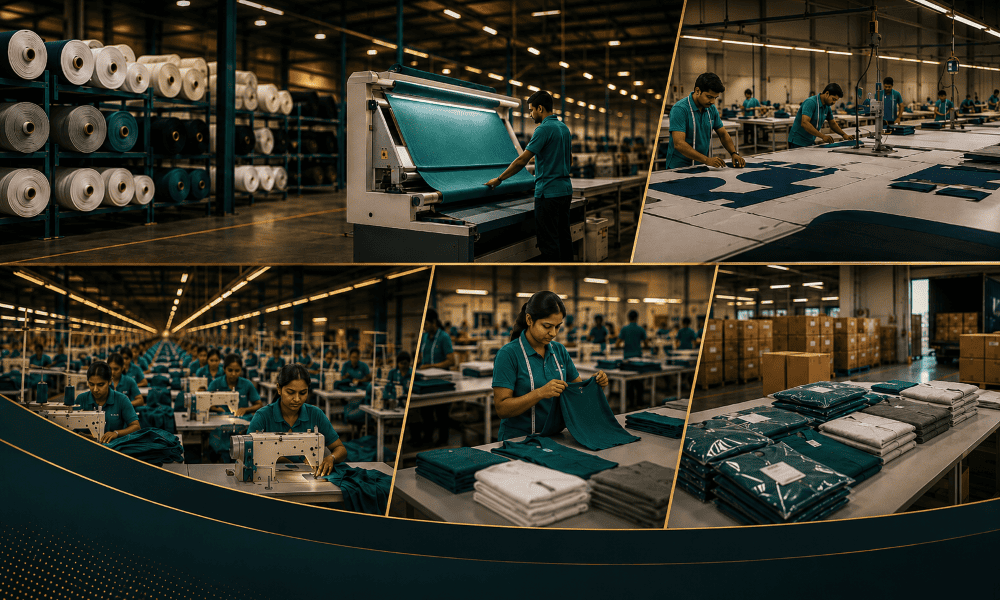
This structured setup allows different departments to function efficiently while remaining closely connected throughout the production cycle. Fabric inspection, merchandising, planning, sampling, cutting, stitching, quality control, finishing, and packing are managed through coordinated processes.
The facility is designed to support both production efficiency and operational scalability. By maintaining organized workflows, Urbasy can reduce delays, improve material movement, and ensure better coordination between teams.
This integrated setup also gives the company greater control over each stage of garment manufacturing.
Strong Fabric Handling Capabilities
Fabric quality plays a major role in the overall appearance, performance, and durability of a garment.
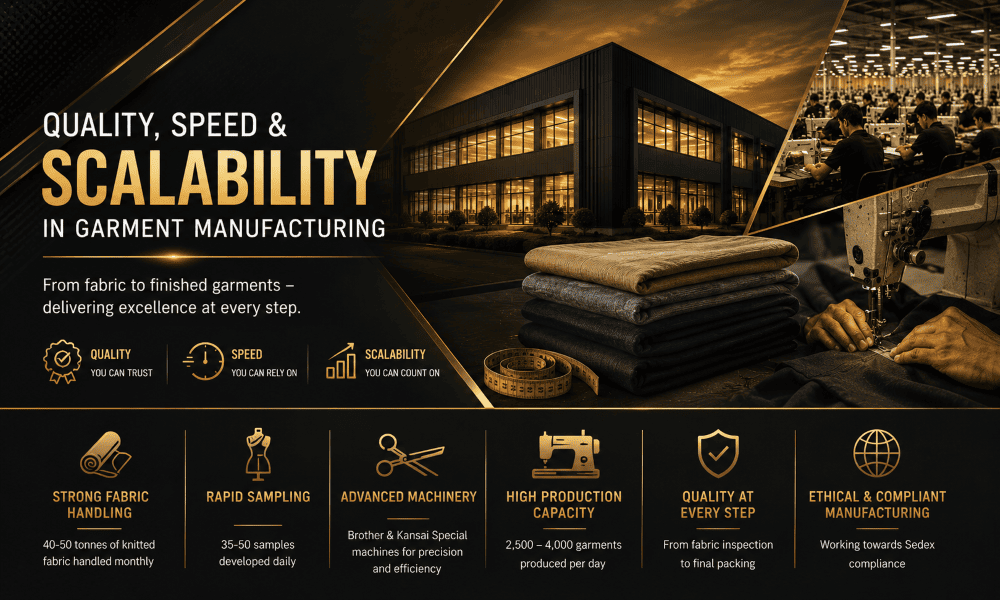
Urbasy Apparels specializes in knitted fabrics and handles approximately 40 to 50 tonnes of fabric every month. This capacity allows the company to support different order sizes while maintaining a consistent production flow.
Before the fabric reaches the cutting stage, it undergoes inspection and quality testing. These checks help identify possible issues such as shade variation, visible defects, shrinkage, width differences, or inconsistencies in fabric structure.
By identifying fabric-related concerns early, Urbasy can minimize production risks and improve the quality of finished garments.
Faster Product Development Through Sampling
Speed is one of the most important factors in the fashion industry. Trends change quickly, product collections are launched frequently, and brands often need samples within short timelines.
Urbasy Apparels has a dedicated sampling team capable of developing approximately 35 to 50 samples per day.
The sampling department works closely with merchandising, fabric, pattern, and production teams to translate design concepts into physical garments. Each sample helps buyers evaluate the garment’s fit, construction, fabric behavior, measurements, stitching details, and overall appearance.
A strong sampling process reduces the chances of errors during bulk production and allows brands to make necessary improvements before confirming the final order.
This fast development capability helps Urbasy support brands that operate in dynamic and trend-driven markets.
Efficient Cutting and Production Systems
The cutting stage requires accuracy because even small errors can lead to fabric wastage, measurement issues, and production inconsistencies.
Urbasy’s manufacturing setup includes multiple cutting lines designed to support efficient fabric spreading, pattern placement, and garment component preparation.
Once cutting is completed, garment pieces move into the stitching and assembly process. The production floor is equipped with machinery from globally recognized brands such as Brother and Kansai Special.
These machines support different stitching operations and help maintain consistency across larger production volumes.
Depending on the style, construction, and complexity of the garment, Urbasy can manufacture approximately 2,500 to 4,000 pieces per day.
This production capacity gives the company the flexibility to manage different order requirements while maintaining quality and delivery performance.
Quality Control Throughout the Production Cycle
Quality cannot be achieved through final inspection alone. It must be monitored throughout the entire manufacturing process.
At Urbasy Apparels, quality control begins with fabric inspection and continues through cutting, stitching, finishing, measurement checking, and packing.
Regular inspections during production help teams identify defects at an early stage. This reduces rework, prevents repeated errors, and ensures that garments remain aligned with buyer specifications.
The company’s quality teams focus on important areas such as:
- Fabric quality and shade consistency
- Stitching strength and appearance
- Garment measurements
- Construction accuracy
- Trims and accessories
- Finishing standards
- Packing requirements
By maintaining quality checkpoints at different stages, Urbasy aims to deliver reliable and consistent results across every production batch.
Flexibility for Different Styles and Order Volumes
Apparel manufacturing is rarely predictable. Brands may introduce new styles, revise quantities, change fabrics, or update delivery schedules according to market demand.
Urbasy Apparels has developed an agile production structure to respond to these changes efficiently.
Its experienced merchandising and planning teams coordinate with production departments to manage material availability, line allocation, sampling approvals, and delivery schedules.
This flexibility allows the company to handle different garment styles and order volumes without compromising production control.
For growing fashion brands, this level of responsiveness can be especially valuable because it supports quicker decisions and faster market entry.
Supporting Global Compliance and Ethical Manufacturing
International apparel brands are increasingly focused on how and where their garments are produced.
Quality and pricing remain important, but buyers also expect ethical workplace practices, supply-chain transparency, and responsible manufacturing systems.
Urbasy Apparels continues to invest in process improvements, workforce capabilities, and compliance initiatives. The company is also working toward Sedex compliance as part of its commitment to ethical manufacturing and responsible business practices.
These efforts demonstrate Urbasy’s focus on building long-term relationships with brands that value transparency, compliance, and sustainability.
Why Global Apparel Brands Need Integrated Manufacturing Partners
Working with an integrated manufacturing company can help brands simplify communication, reduce production risks, and improve supply-chain visibility.
Instead of managing multiple vendors for fabric, sampling, cutting, stitching, finishing, and quality control, brands can work with a single coordinated manufacturing partner.
Urbasy’s fabric-to-garment approach offers several advantages:
- Better control over quality
- Faster sample development
- Improved production planning
- Consistent communication
- Reduced operational delays
- Scalable manufacturing capacity
- Greater supply-chain transparency
This integrated model helps create a smoother production experience from product development to final delivery.
Building Long-Term Manufacturing Partnerships
Urbasy Apparels is focused not only on increasing production capacity but also on improving the overall value it provides to clients.
With modern infrastructure, strong knitted fabric expertise, rapid sampling, efficient manufacturing systems, and continuous quality monitoring, the company is building a solid foundation for long-term growth.
Its ability to combine quality, speed, flexibility, and responsible manufacturing makes Urbasy a promising partner for international apparel brands looking for dependable sourcing and production support.
As the global fashion industry continues to evolve, Urbasy Apparels remains committed to strengthening its processes, expanding its capabilities, and delivering garments that meet the expectations of modern brands and consumers.